Historic Batavia reaches land after months of planning
After 15 months of engineering, planning and preparation, the Batavia is reaching one of the most significant stages of her move to a new permanent location at Museum Batavialand in Lelystad, the Netherlands.
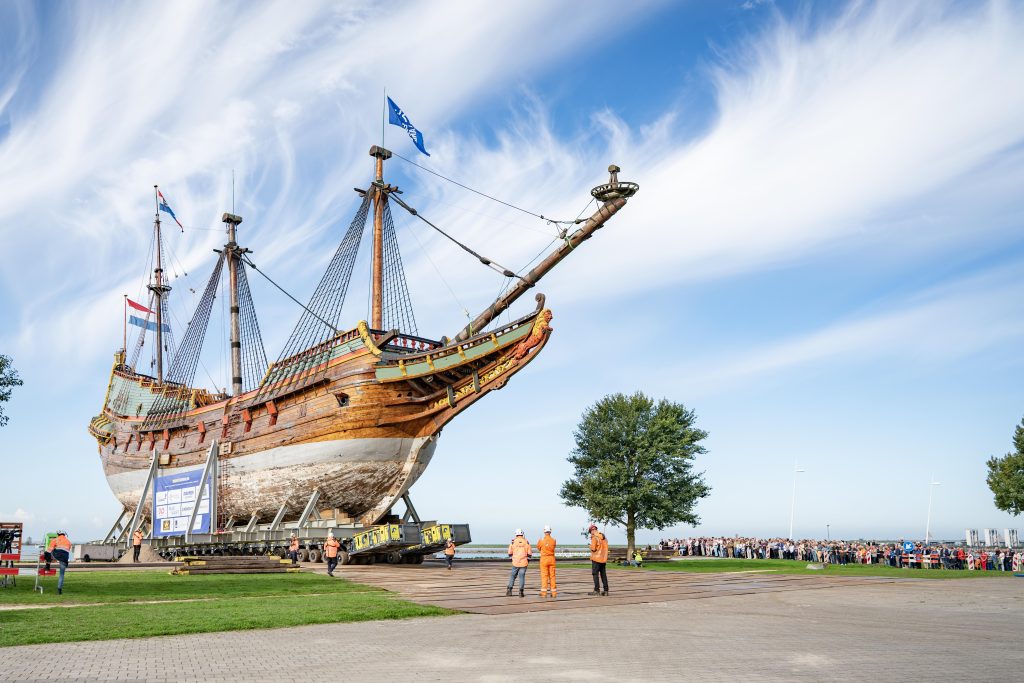
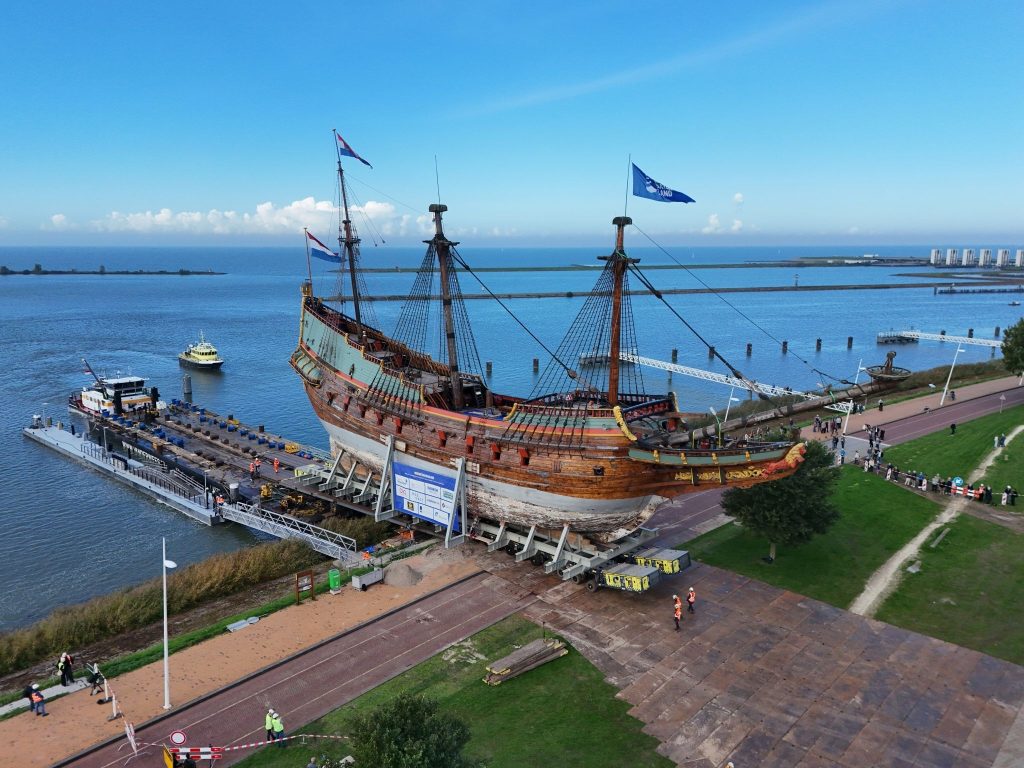
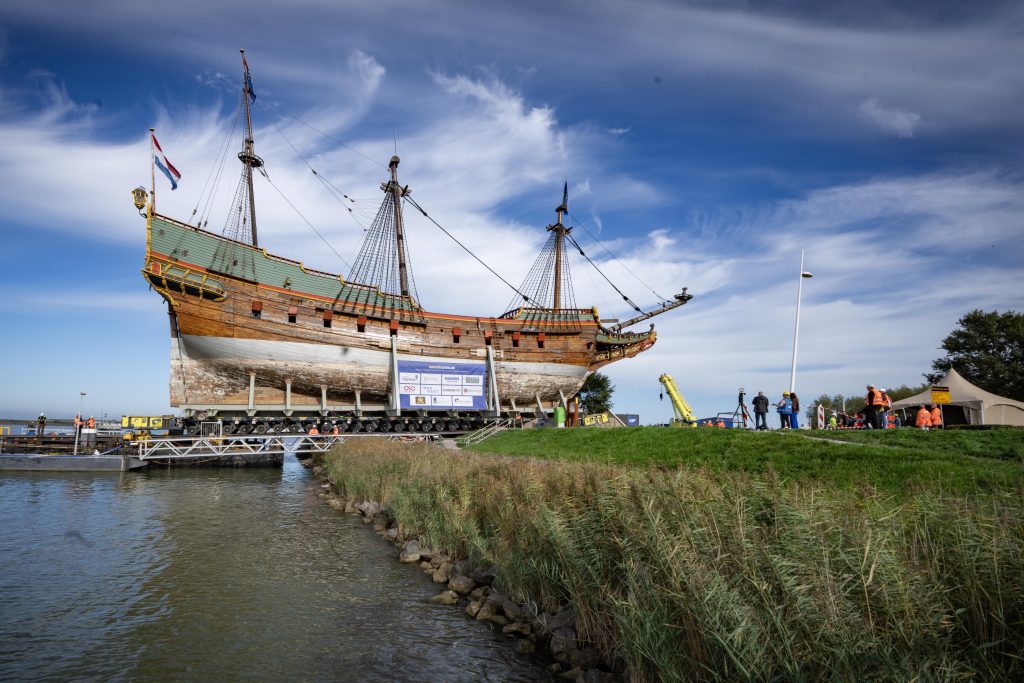
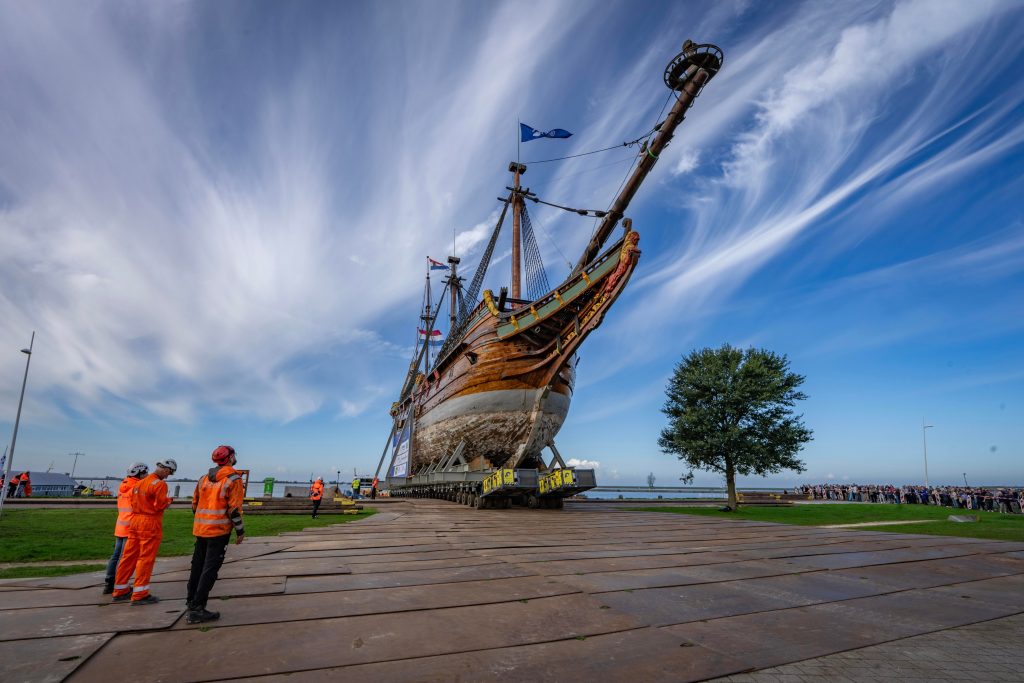
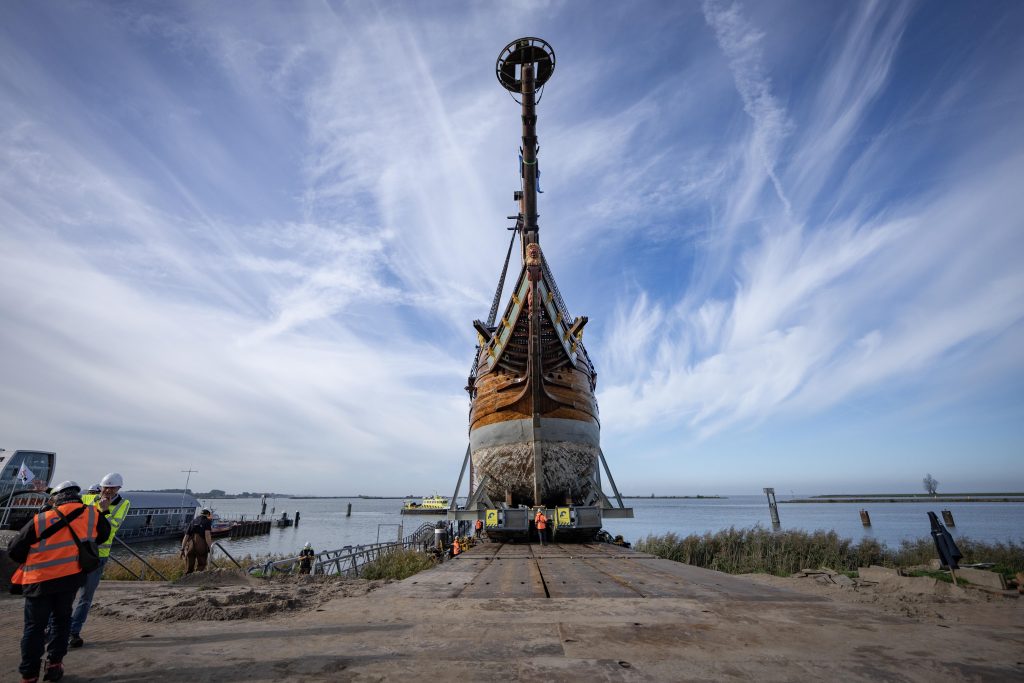
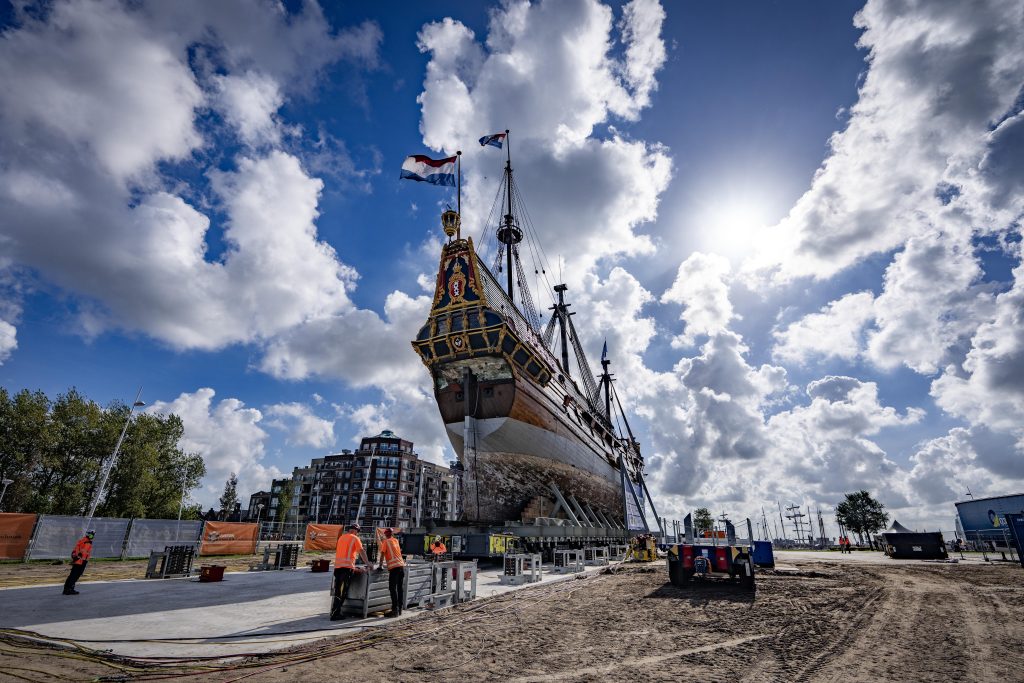
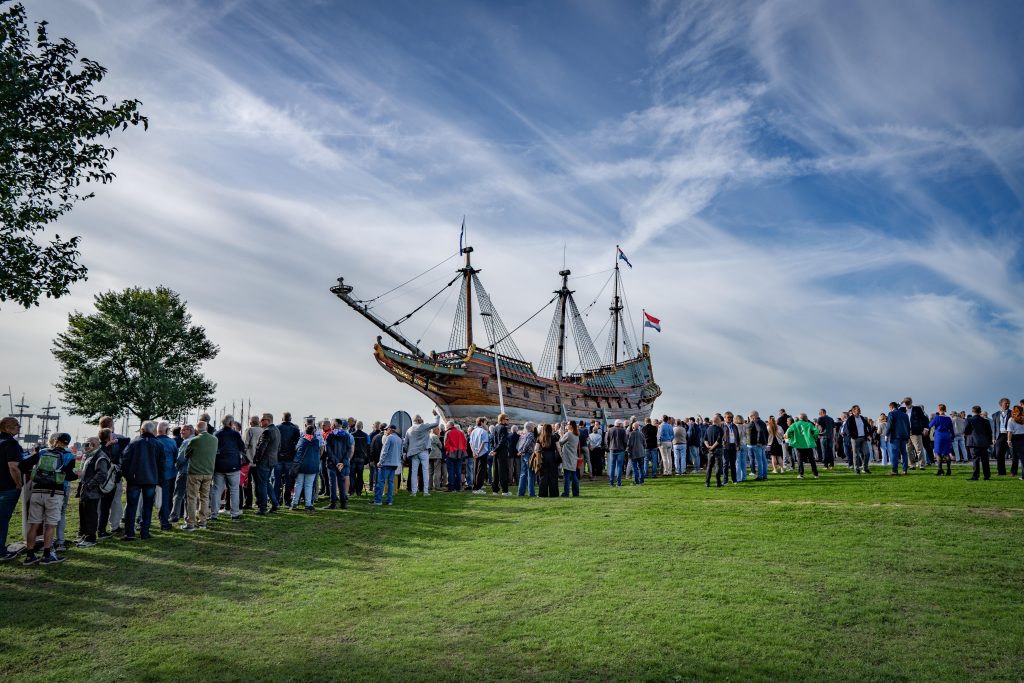
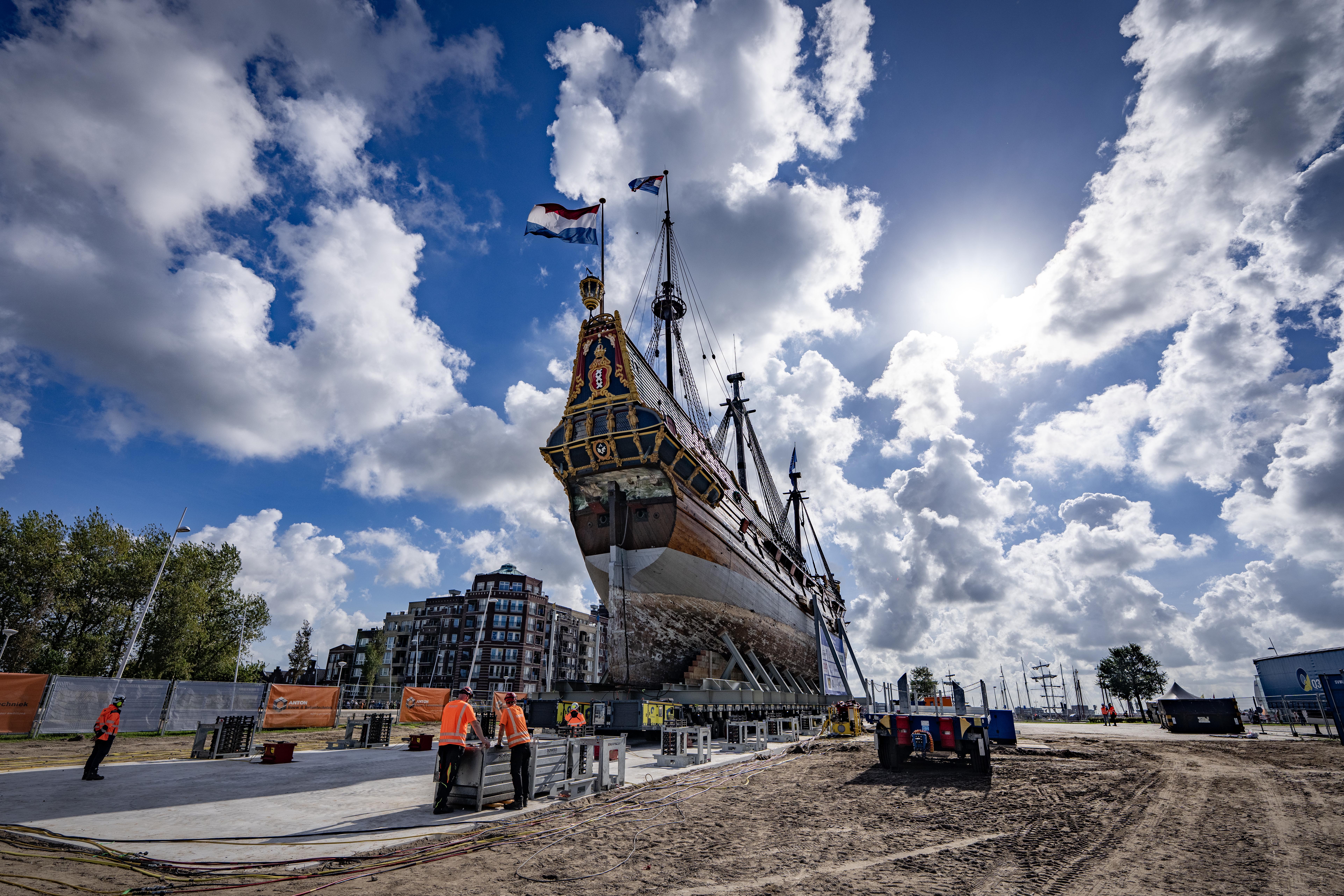
On 2 October, the full-scale reconstruction of the 17th-century Dutch East India Company vessel is being moved ashore and over a dike. It brings the project close to completion, but work will continue before the Batavia is positioned on her permanent foundation. At 56.6 m long, 10.5 m wide and approximately 646 metric tonnes, the Batavia is an unusual load. More importantly, her wooden structure requires particularly careful handling. The timber hull has been afloat for 31 years, while the vessel’s masts and rigging have remained in place during the move.
“What people see today is the result of a very long preparation process,” says Ard Suvaal, Group Technical Lead at TGP. “Several hundreds of hours have gone into the project planning, engineering coordination, risk analysis, permitting and preparation. With a vessel like the Batavia, every stage influences the next one, so the complete sequence had to be considered from the start.” Planning began well before the first physical movement. Among the early challenges was finding a workable transport concept. Water depth limited the use of different pontoon options, while the dimensions of suitable seagoing equipment created further restrictions for the inland route.
“Moving the vessel was never simply a matter of finding a pontoon,” says Ard Suvaal. “We had to consider the condition of the ship, water depths, the restrictions of the inland waterways and the transfer between the different stages. The solution for one part had to work with everything that came before and after it.”
The operation began with the Batavia being towed approximately 50 km from Lelystad to Amsterdam on her own hull. At the shipyard in Amsterdam, she was carefully lowered into a purpose-built steel and timber cradle. On 24 September, that stage was completed successfully.
Preparation for the operation included removing the vessel’s cannons and some of her ballast and installing temporary steel supports inside the ship. These supports help absorb the forces on the hull as the Batavia makes the transition from being supported by water to being supported by the cradle. The dry-docking sequence alone was developed over approximately 15 months.
“The condition of the Batavia makes this quite different from the industrial cargo we normally handle,” says Ard Suvaal. “She is a historic wooden vessel, so the loads and support of the hull have been an important consideration throughout the planning. There has been a great deal of engineering behind what, from the outside, may look like a relatively short movement.”
The project brings together seven contractors and a range of specialist expertise. TGP is responsible for overall project management, risk analysis, permitting and public safety.
“A large part of our work has been bringing all those elements together,” says Ard Suvaal. “It means coordinating the engineering and the interfaces between the different parties, making sure the right expertise is available at the right point and working through the risks before we reach each stage. For this project, we also required permits from four different government authorities. We had several constructive meetings, and I’m very grateful for the can-do approach of Waterschap Zuiderzeeland, Rijkswaterstaat, Provincie Flevoland and Gemeente Lelystad throughout the process.”
The move over the dike on 2 October is one of the last major steps in a project that has been under development for more than a year. But it is not quite the finish line. Once ashore, the Batavia still needs to be brought to her final position and jacked down on her permanent foundation at Museum Batavialand.
“Seeing the Batavia come over the dike will be a major milestone for everyone involved,” says Ard Suvaal. “We are almost there, but the project is not finished until she is safely in her permanent position. Until then, the same careful planning continues.”